Pacific Salmon
Oncorhynchus spp.
Also known as: Wild Salmon, King Salmon, Sockeye
Wild Pacific Salmon from Alaska is one of the most sustainable seafood choices available. These fish are managed under strict regulations and their populations are generally healthy. Includes Chinook, Sockeye, Coho, Pink, and Chum salmon.
Max Size
58 inches (147 cm) - Chinook
Lifespan
2-7 years depending on species
Depth
0-250 meters
Water Type
freshwater
Scientific Classification
- Class
- Actinopterygii
- Order
- Salmoniformes
- Family
- Salmonidae
- Species
- Oncorhynchus spp.
Habitat & Distribution
Habitat
Distribution
Behavior
Pacific salmon are anadromous, spending 1-5 years in the ocean before returning to their birth streams to spawn. They navigate using Earth's magnetic field and sense of smell.
Reproduction
Females dig nests (redds) in gravel streambeds. After spawning, all Pacific salmon die, providing nutrients to the ecosystem. Their bodies feed bears, eagles, and even trees.
Conservation Status
Main Threats
- Dams
- Habitat loss
- Climate change
- Overfishing
🎉 Fun Facts
- Pacific salmon die after spawning (unlike Atlantic salmon)
- They can smell their home river from hundreds of miles away
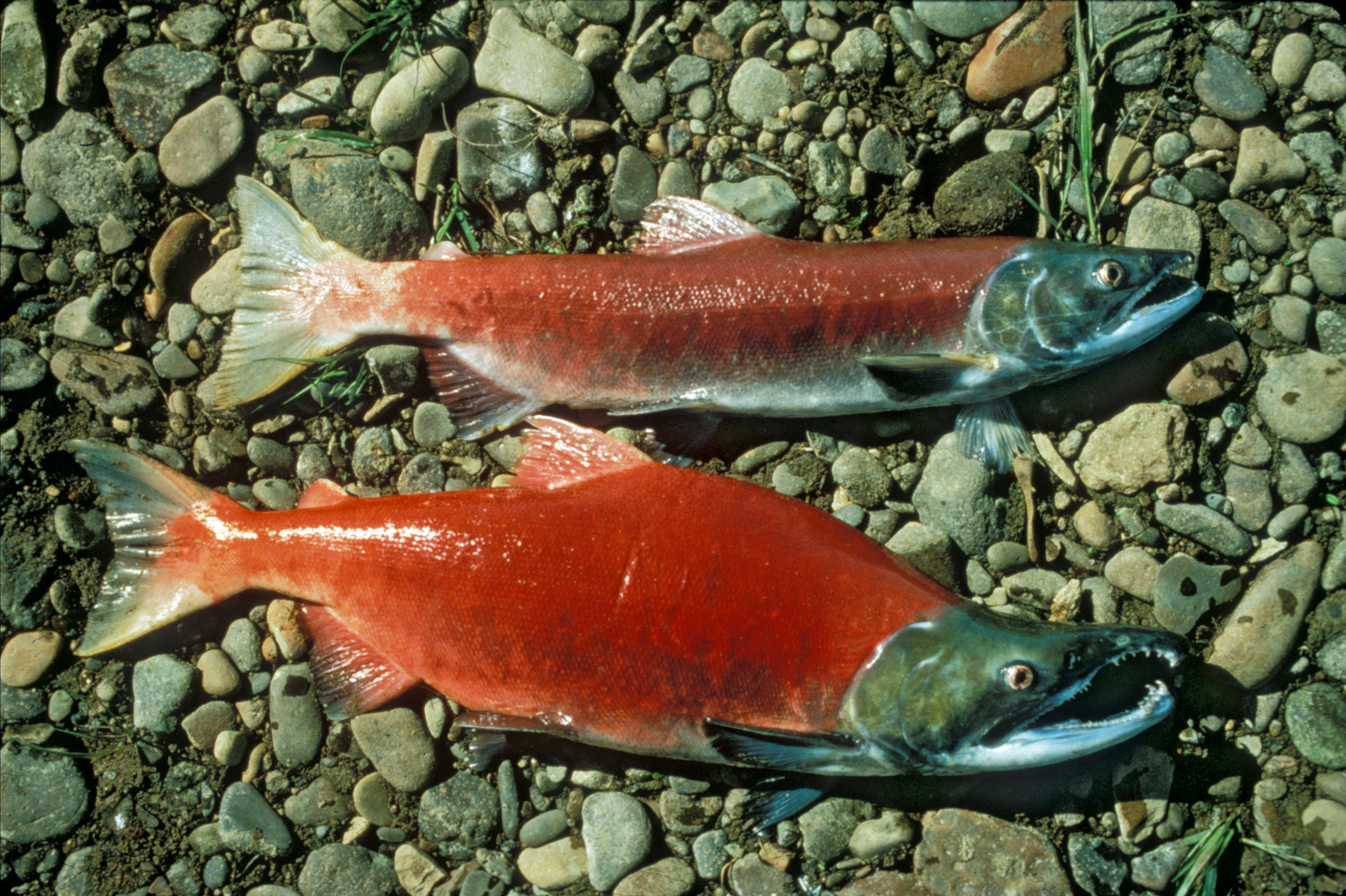
- Their bodies turn red during spawning season
- Salmon bring ocean nutrients deep into forests
- Alaska catches over 200 million salmon annually